Introduction
If you’re into houseplants, you’ve probably come across references to “Monstera deliciosa” (often called the Swiss-cheese plant) and “Monstera borsigiana”. Many people ask: Are they the same plant? How do I tell which one I have? In this post I’ll walk through what the science says what to look out for, with photos to help.
What each name refers to
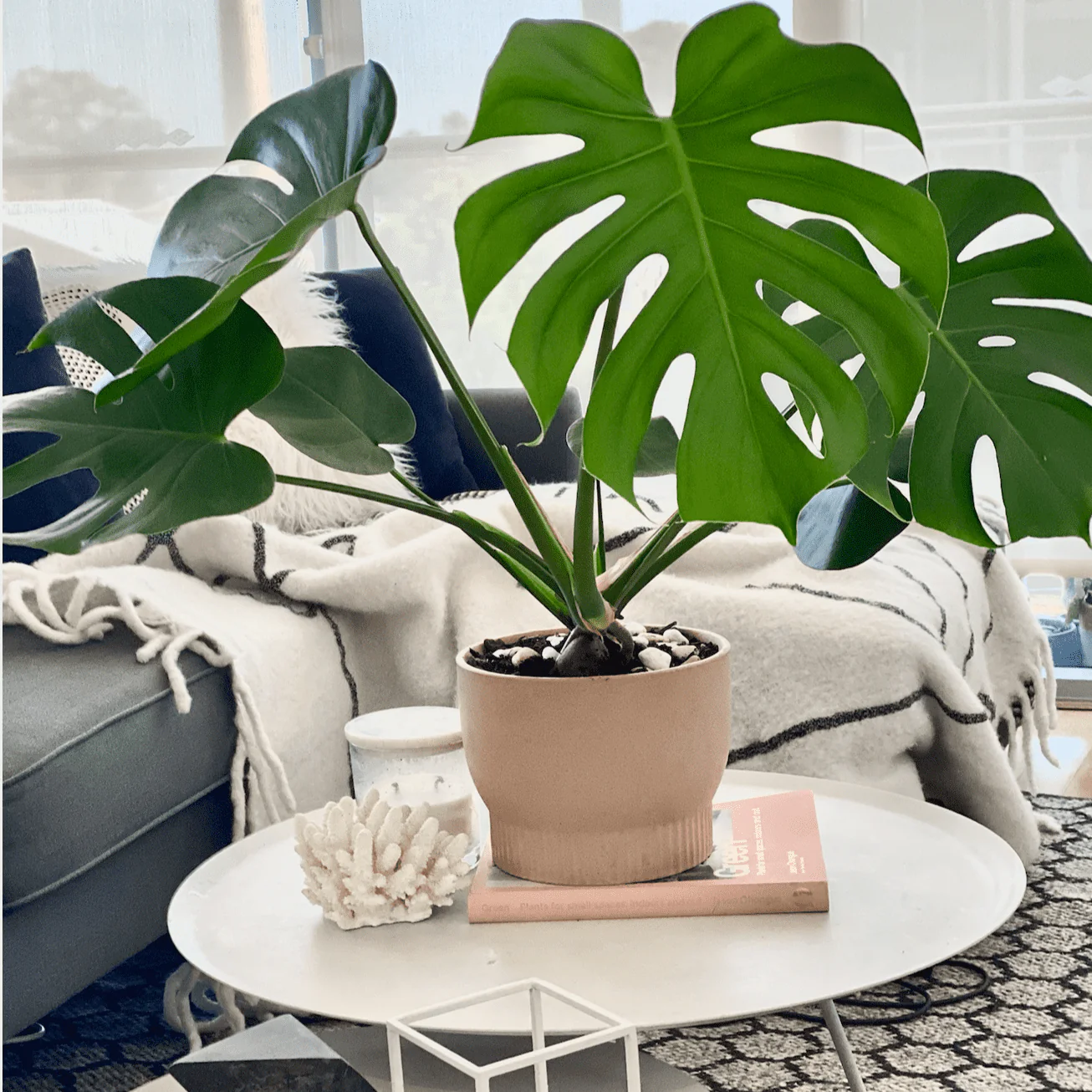
Monstera Deliciosa


6
This is the “classic” species of the genus Monstera, native to tropical regions (Mexico to Panama). It’s known for its large, glossy leaves with many splits/holes (fenestrations) and has become a very popular indoor plant.
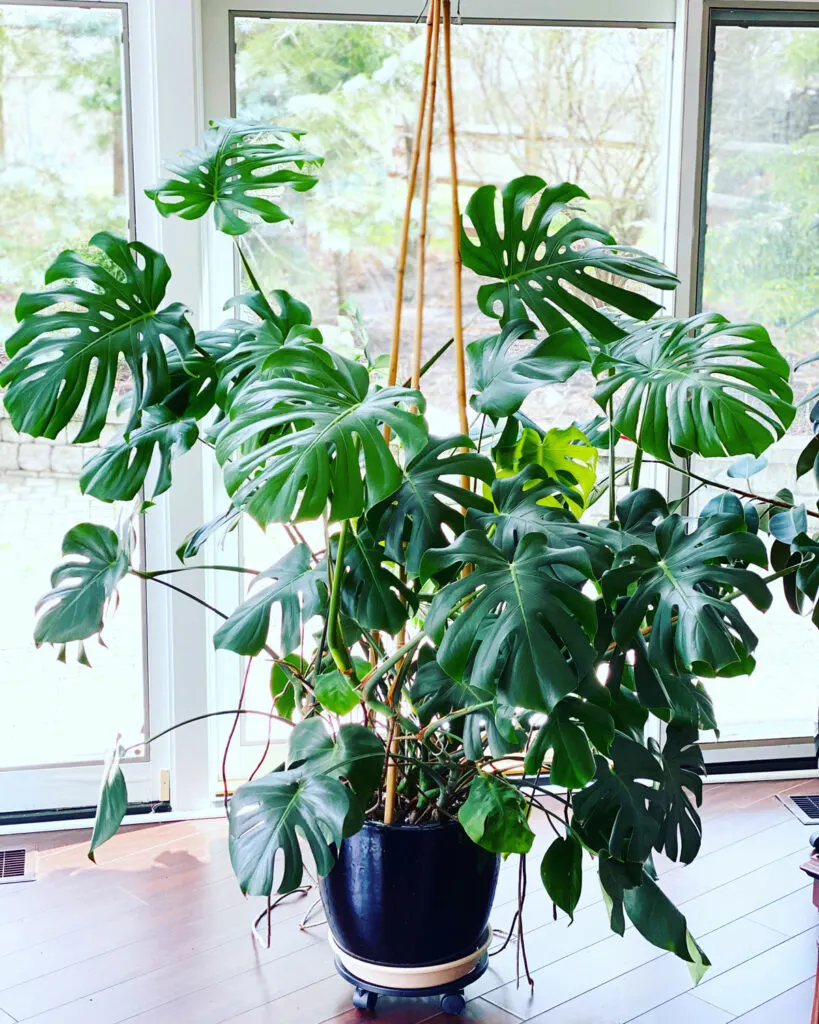
Monstera Borsigiana


6
The name “borsigiana” is used in horticulture to refer to a form or variety of Monstera that is smaller / more compact than typical “deliciosa”. However, botanic sources point out that borsigiana is not a separate species: it is considered a synonym or variety of M. deliciosa.
Key differences (what to look for)
Here are some of the practical differences people use (for care and identification). Note: growing conditions, age, light, support, etc., all influence how a plant looks — so none of these are bullet-proof alone.
Leaf size & fenestration
- Monstera deliciosa tends to have larger leaves (in ideal conditions) with more pronounced splits/holes (multiple rows of fenestrations) compared to what is labelled as borsigiana.
- Borsigiana often has smaller, narrower leaves with fewer holes or splits (often one row of fenestrations) and a more compact form.
So if you have a massive leaf that spans 60 + cm, likely you’re dealing with a “large form” (deliciosa). If the leaves are much smaller and fewer holes, perhaps the borsigiana name is applied.
Petiole / Geniculum (leaf-stem joint) “ruffles”
One identification tip: On mature leaves of true deliciosa, you may see ripples or ruffles at the point where the leaf petiole meets the stem (the geniculum). According to horticultural sources, the borsigiana form tends to have minimal or absent ripples.
That said, this trait is not 100% reliable especially on young plants — maturity/age matters.
Internode / Climbing habit / Growth rate
- Borsigiana tends to have longer internodes (distance between nodes) and may climb or vine more rapidly upward, giving a “legs”-look rather than bushy rooted growth.
- Deliciosa may show a more robust, fuller growth with shorter internodes, more mature leaf size, etc. Some hobbyists note that the borsigiana “looks neater” and more vine-like.
In short: if your Monstera zigzags up a pole with long spacing, maybe borsigiana-style; if it’s fuller with larger leaves, maybe the large form.
Taxonomy / scientific naming
This is where things get interesting: Many plant-taxonomists assert that there is only one accepted species: Monstera deliciosa. The “borsigiana” name is treated as a synonym or variety, not a separate species.
So when you buy a plant labelled “Monstera borsigiana”, you’re often buying a cultivar or smaller form of Monstera delicious a, not a totally different species.
The practical implications: For care, they are largely similar. The distinctions are mostly morphological/habitual rather than radically different care needs.
Similarities — what they share
Since they are essentially the same species (or at least closely so), they share lots of care requirements and traits:
- Both will develop fenestrated leaves (holes and splits) as they mature in good conditions.
- Both prefer bright, indirect light, warm temperatures and good humidity (they hail from tropical forests).
- Both are climbing plants that appreciate vertical support (moss poles, trellises) to allow aerial roots to grip and leaves to expand.
- Both contain calcium-oxalate crystals (as many Araceae do) and are considered mildly toxic to pets/humans if ingested.
So, which should you get / choose?
Here are some decision-points if you’re choosing between them (or trying to figure out what you already have).
- If your space is smaller, you might prefer the “borsigiana” labelled plant because it tends to stay more compact and with smaller leaves.
- If you have space, good light and height, you can opt for the “deliciosa large form” to get super-dramatic huge leaves.
- But: don’t stress too much on the label. Since they are so cosmetically variable (depending on light, support, age), what matters more is giving the plant good conditions (light, support, proper watering) so that whichever form you have can thrive. One article summarized: “…leaves will never reach the mature size that they would in the wild, leading many people to believe that they have borsigiana.”
- If you already have one, focus on the care rather than the exact name.
Care tips (for either)
Here are a few care reminders that apply to both forms:
- Provide bright indirect light — avoid direct harsh sun that may scorch leaves.
- Use a well-draining potting mix (lots of aeration) and ensure the pot has drainage.
- Water when the top inch of soil is dry, avoid letting the plant sit in soggy soil (root-rot risk).
- Provide a moss pole or stake so the vine can climb — this encourages larger leaves and good form.
- Maintain moderate to high humidity, and avoid cold drafts (tropical plant).
- Fertilise lightly during the growing season to support growth.
Final thoughts
While the names “Monstera deliciosa” and “Monstera borsigiana” may suggest two totally different plants, in reality the difference is more about growth habit, size, and leaf morphology than entirely separate species. Taxonomically speaking, deliciosa is the accepted species and borsigiana is often treated as a variety.
In the end, whichever one you own, treat it well, give it good light and support — and you’ll end up with a stunning “Swiss-cheese leaf” plant regardless.